
Organising a wedding means dedicating time to choosing the venue, the style of the celebration, and the details that will make the day unique. Alongside planning the event, however, there is an administrative aspect that requires careful attention: the documents and procedures for a civil wedding.
Knowing the required steps in advance makes it possible to plan deadlines, avoid last-minute rushes, and approach the preparations with greater peace of mind. Procedures may vary depending on the personal circumstances of the future spouses and the relevant municipality, so it is always important to check the official guidelines.
Where to Start
The first point of contact is the Civil Registry Office of the municipality where the procedure will be initiated. The office will indicate what information to provide, which documents are required, and how to schedule the necessary appointments.
In many cases, some personal details can be obtained directly by public offices. However, this does not mean that every situation is the same: citizenship, residency, previous marriages, or other personal circumstances may require specific checks and additional formalities.
The most useful rule is not to rely on general information without verifying it with the municipality. Una telefonata o una richiesta scritta all’ufficio competente può chiarire i passaggi da seguire e le tempistiche da rispettare.
Marriage Banns and Choosing the Date
Among the formalities to consider may be the publication of marriage banns, through which the intention to marry is made public in accordance with the procedures established by law. The procedure, timing, and validity of the banns must be verified with the relevant authority.
It is advisable to make enquiries before definitively confirming the ceremony date, especially if you wish to get married on a particularly popular date or at a venue other than the municipal offices. The availability of the venue and that of the officiant must be coordinated with the other deadlines.
The choice of venue also requires careful consideration: not all venues or private establishments are automatically available for civil ceremonies. It is necessary to ensure that they are designated and authorised in accordance with the applicable regulations.
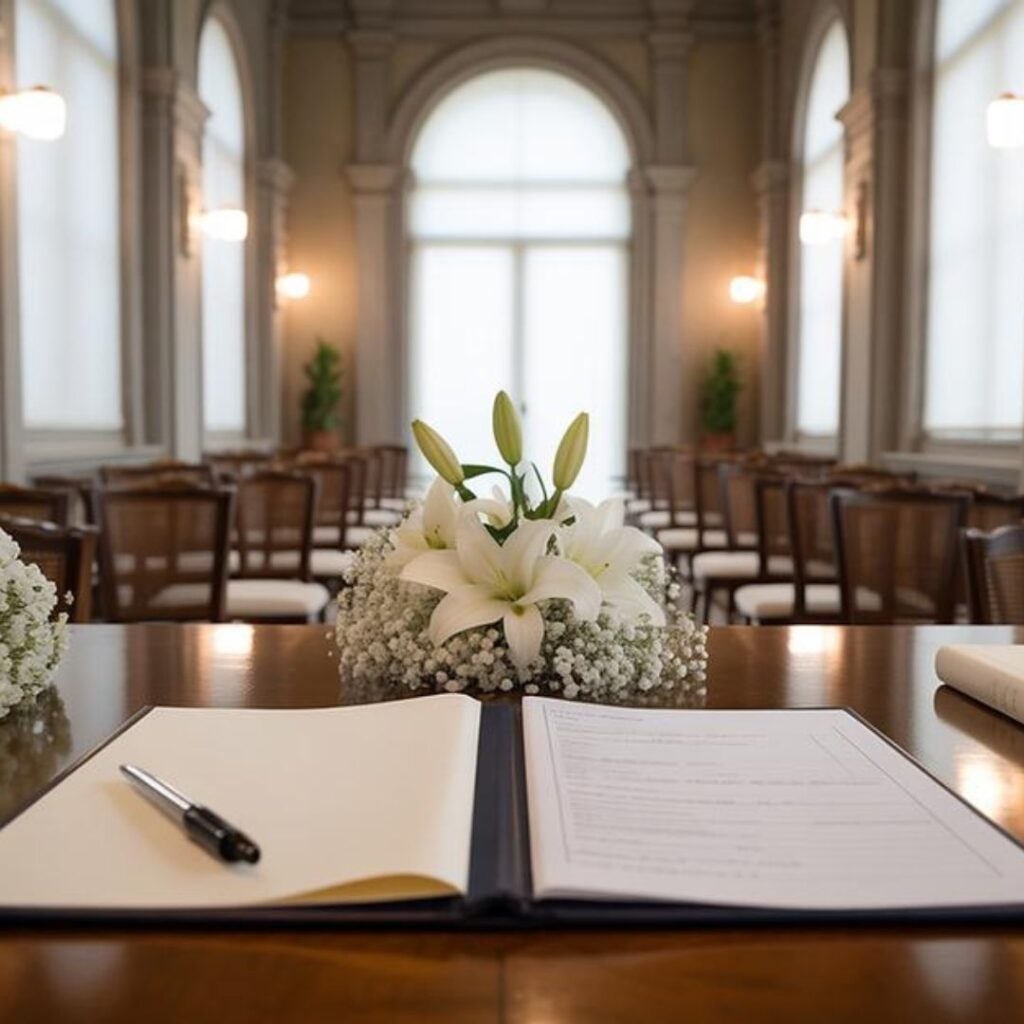
Witnesses, Documents, and Information to Verify
The future spouses should enquire about identification procedures, witness requirements, and any documents that must be presented on the wedding day. It is useful to compile names, contact details, appointments, and information received from the offices in a single checklist.
If one of the future spouses is a foreign national, or if their personal circumstances involve specific particularities, additional documents, translations, or specific certificates may be required. In these cases, it is advisable to begin the necessary checks well in advance.
Each document must be checked according to the specific circumstances of the case., avoiding the assumption that procedures followed by other couples are also applicable to their own situation.
Integrating the Formalities into the Wedding Plan
The administrative side should not become a source of anxiety. Adding deadlines to the overall calendar, keeping the communications received, and assigning a review date to each task helps keep everything under control.
Il supporto della wedding planner può essere utile per coordinare le scadenze organizzative con il programma dell’evento, ricordare gli appuntamenti e mantenere una visione d’insieme. Le verifiche legali e amministrative, invece, devono sempre fare riferimento agli uffici competenti.
Peace of mind on the wedding day also begins with thoughtful preparation. With up-to-date information, realistic timelines, and good organisation, the formal aspects can be managed without taking away from the most exciting part of the journey.