
The wedding reception is one of the moments when guests share the pleasure of conviviality. The menu contributes significantly to the experience of the day, as it brings together flavour, seasonality, quality of service, and the identity of the wedding. The tasting is therefore an important step: it allows the couple to explore the catering company’s or venue’s offerings and carefully evaluate the most suitable options.
It is not simply a matter of choosing favourite dishes, but of understanding how the entire dining experience unfolds. The balance between courses, presentation, service timing, and attention to guests’ needs must all be considered as a whole.
An effective tasting helps couples make informed decisions before the wedding. Sampling the dishes, asking questions, and consulting with professionals allows them to create a menu that aligns with the style of the reception and the couple’s expectations.
Evaluating the Menu as a Whole
During the tasting, it is useful to consider the sequence of courses, ensuring that the dining experience is balanced and suited to the planned duration of the reception. Quantities, variety, and intensity of flavours should be assessed as a whole, avoiding a menu that feels too heavy or lacks harmony.
The quality of the ingredients, seasonality, and attention to presentation all contribute to the overall experience. It is advisable to ask about the origin of the ingredients, preparation methods, and any possible variations depending on product availability.
Beverages also deserve careful consideration. The selection should complement the menu and reflect the couple’s preferences, taking into account the duration of the service and the variety of courses. It is useful to clarify which options are included in the quotation and which involve additional costs.
The tasting should take place in conditions that allow the food to be evaluated at a relaxed pace. Taking notes on the courses, recording preferences, and noting any questions to explore further facilitates subsequent discussions.
Reception Service and Organisation
A well-designed menu must be accompanied by an appropriate level of service. It is important to understand how courses will be served, how staff will be coordinated, and how communication with the kitchen will be managed. The number of guests, the table layout, and the configuration of the spaces can all influence service times and procedures.
When discussing the arrangements with the catering company, it is useful to check how the main moments of the reception will be managed and what operational requirements the venue may have. The sequence of courses should integrate with any speeches, musical performances, and special moments, avoiding disruptions that could affect the flow of the event.
The contractual terms must also be clear: minimum number of guests, deadlines for confirming attendance, any menu changes, and costs for additional services.
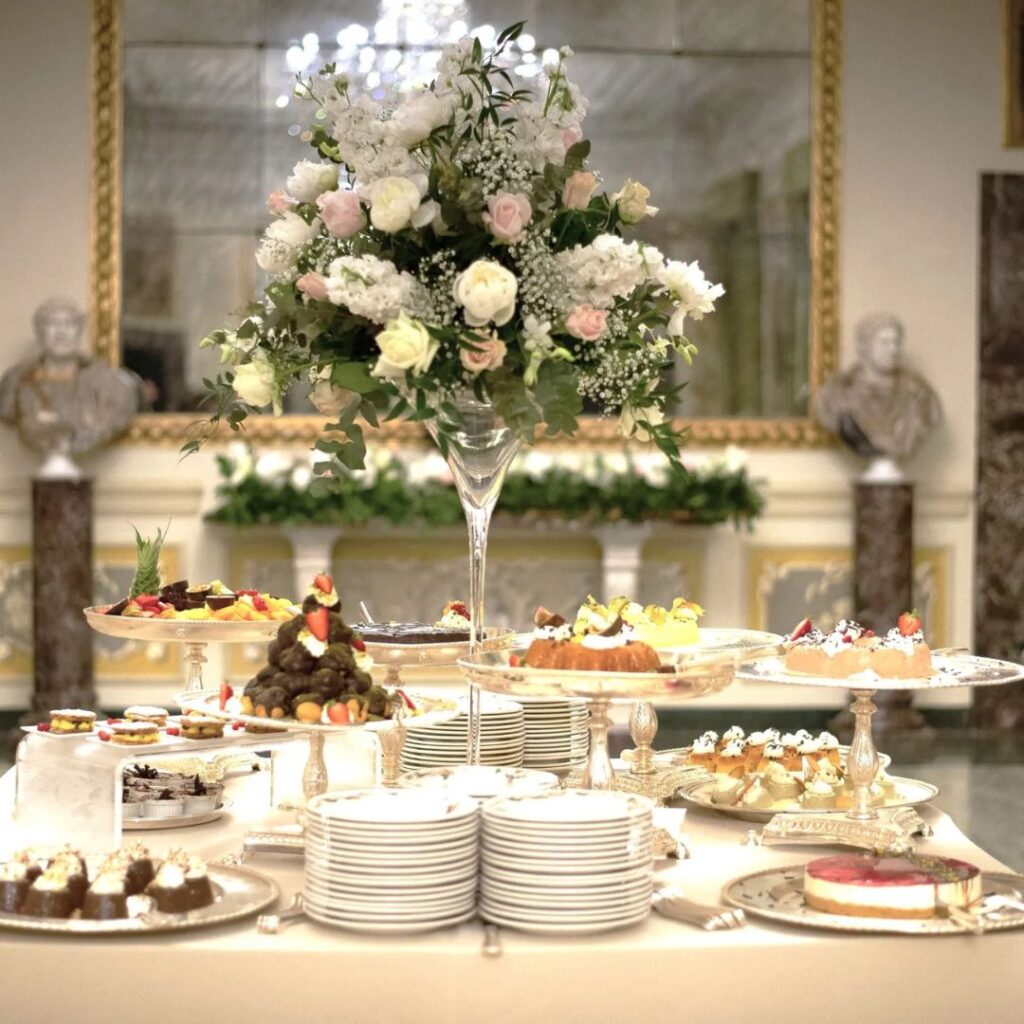
Allergies, Intolerances, and Dietary Preferences
Managing dietary requirements requires care and timely communication. It is important to collect the necessary information from guests and pass it on to the catering team through agreed procedures, while respecting the confidentiality of personal information.
Allergies and intolerances should not be treated as mere preferences: they require precise information and appropriate procedures from the professional in charge. It is advisable to verify which ingredients are used in the dishes, how cross-contamination is managed, and which alternatives are genuinely safe.
Vegetarian, vegan, or other alternatives requested by guests can be provided. These options should maintain the same level of care and attention as the main menu, rather than being treated as improvised solutions.
Attention to dietary requirements is a tangible expression of hospitality. A well-organised menu should not only satisfy the couple’s tastes, but also allow guests to enjoy the reception with peace of mind and feel that their needs have been considered.
From Tasting to the Final Selection
After the tasting, it is useful to gather feedback and discuss any adjustments with the catering team. Decisions should be confirmed in writing, ensuring a clear record of the agreed courses, dietary alternatives, and service arrangements.
For Filomena D’Amelio, planning the reception requires an overall vision in which gastronomy, organisation, and hospitality are closely interconnected. Coordinating the menu with the other moments of the day helps create a cohesive and enjoyable experience.
The tasting thus becomes much more than a preliminary sampling: it is an opportunity to evaluate, compare, and thoughtfully define a central element of the wedding. The care given to the menu, combined with the quality of the service and consideration for the guests, helps make the reception a moment of genuine sharing.