
The reception is one of the moments when wedding organisation becomes visible in every detail. Guests take their seats, courses are served, toasts alternate with speeches, and the day progresses towards its final moments. For everything to feel natural, precise coordination is necessary behind the convivial atmosphere.
The service should not be perceived as a rigid succession of timings, but as a rhythm capable of guiding the guests’ experience. Technical coordination makes it possible to maintain fluidity, service quality, and harmony between the different moments of the reception.
Creating a realistic timeline
Planning starts with the overall sequence: guests’ arrival, aperitif, seating arrangements, serving of the courses, toasts, speeches, cake cutting, and subsequent moments. The timeline must be shared with the venue and the suppliers involved, taking into account the characteristics of the menu and the spaces.
Timings cannot be defined on paper alone. The number of guests, table layout, distances between the kitchen and the dining area, and service methods influence the duration of the different stages.
It is useful to allow reasonable buffers between one moment and the next, avoiding an overly tight schedule. A well-coordinated dinner leaves room for conviviality without unnecessarily prolonging waiting times.
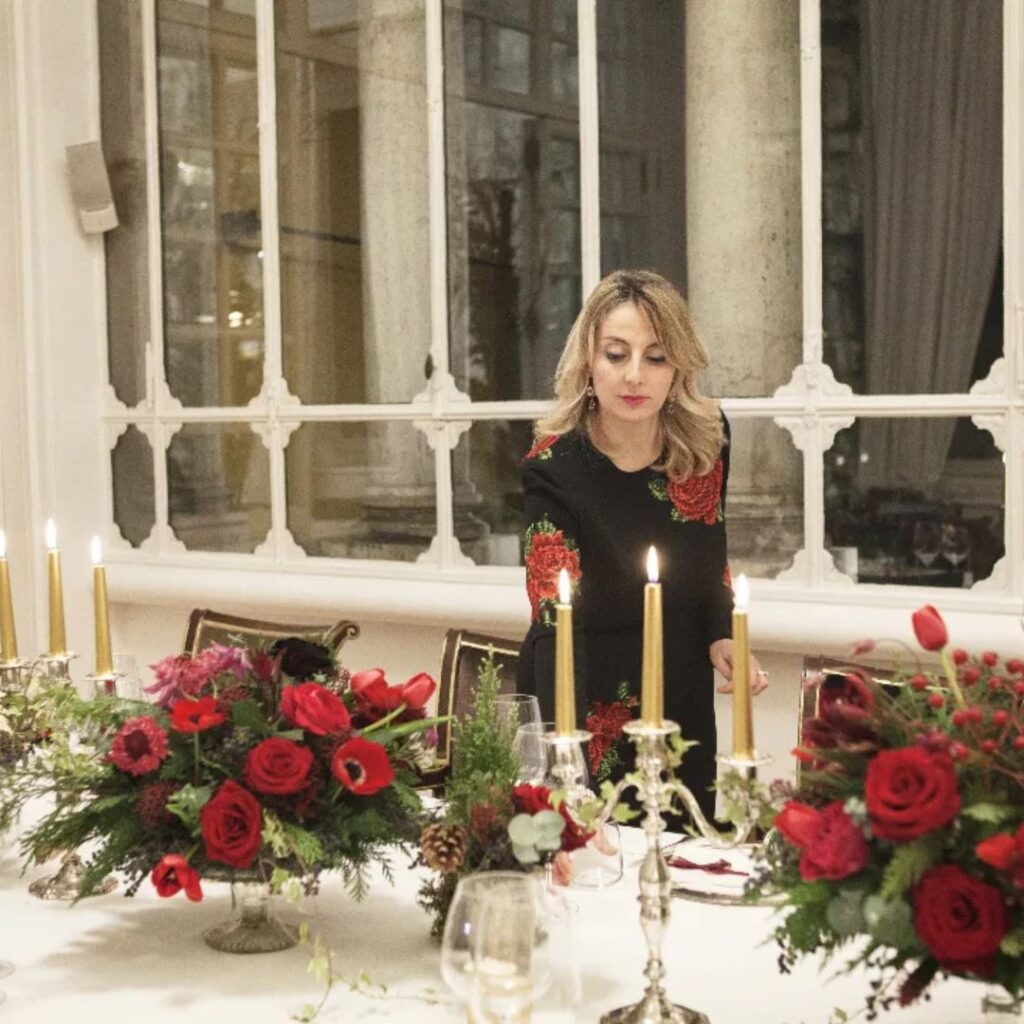
Coordinating the kitchen, dining room, and entertainment
The catering service must work in coordination with the overall schedule. The kitchen needs updated information on the number of place settings and dietary requirements; the dining room staff must know the sequence of courses and the agreed service arrangements.
Music, photography, and guest speeches also require coordination. An impromptu speech in the middle of service, for example, can affect the kitchen’s timings; likewise, a musical moment should be scheduled without interrupting important stages.
Communication between the coordinators is one of the most effective tools for preventing misalignment. Establishing who coordinates the information and whom to contact in the event of changes reduces confusion and makes it easier to take action.
Managing the transitions between courses
The pace of dinner also depends on the ability to observe what is happening in the dining room. Timing must allow guests to eat at their leisure, while also remaining compatible with the quality of the dishes and the evening’s schedule.
Coordination requires attention to the signals from the service staff, the kitchen’s needs, and any scheduled activities. If speeches or surprises are planned, it is preferable to agree on them in advance, while still allowing some flexibility.
Table management must also take into account guests’ specific needs. Allergies, intolerances, and different menus must be clearly communicated to the catering team and managed according to the agreed procedures.
Handling unexpected situations discreetly
A delay, a change in the schedule, or a technical issue can occur even at a carefully organised event. The difference lies in the ability to handle them without unnecessarily transferring the stress to the couple and their guests.
For this reason, it is useful to identify the suppliers’ points of contact in advance and establish practical solutions for the most foreseeable issues. Not every change requires the entire schedule to be modified: sometimes it is enough to move an activity or adjust a break.
Flexibility works when it is based on a clear organisational structure. Knowing who makes decisions, who communicates, and which alternatives are possible makes it possible to respond promptly and discreetly.
A service that enhances the guests’ experience
Technical coordination should not draw attention to itself. Its value is measured by the smooth flow of one moment into the next and by the couple’s ability to enjoy the reception without having to deal with operational matters.
Filomena D’Amelio Wedding Planner & Designer works to ensure that design and organisation work together, paying attention both to the overall vision and to the practical details that support the event.
When timings, people, and activities are carefully coordinated, the reception can be enjoyed naturally. It is this harmony, created behind the scenes, that helps make the memory of a welcoming, elegant, and well-organised day.