
Before a wedding takes shape through flowers, decorations, and table settings, there is a stage in which ideas are gathered, compared, and transformed into an aesthetic direction. The moodboard is created precisely for this purpose: to bring together images, colours, materials, and visual references to define the atmosphere of the event and create a shared foundation on which to develop the project.
It is not merely a collection of evocative photographs, but a working tool that helps establish how different elements can interact with one another. Through a thoughtful selection of inspiration, the couple and the Wedding Planner can identify a distinctive style, ensuring that individual choices do not feel disconnected.
An effective moodboard does not aim to include every idea possible, but selects those capable of conveying the same vision. Coherence stems from the ability to choose, compare, and set aside elements that do not contribute to the identity of the project.
Starting with the Desired Atmosphere
The first step is to define the feelings the wedding should convey. The couple may wish for a romantic, contemporary, natural, classic, or minimalist atmosphere. These guidelines provide the starting point for selecting references that reflect the couple’s personality and the chosen venue.
È utile raccogliere immagini di architetture, paesaggi, composizioni floreali, tessuti e dettagli decorativi. La selezione dovrebbe privilegiare gli elementi che comunicano sensazioni compatibili, piuttosto che accumulare fotografie soltanto perché belle individualmente.
The venue should also be part of the process from the very beginning. The characteristics of the spaces, the existing colours, the natural light, and the architectural materials can suggest a design direction and help avoid disharmonious contrasts.
Colour Palette and Materials
The colour palette is one of the most important tools for creating visual continuity. It can start with a dominant shade, complemented by secondary colours and accents used sparingly. It is not necessary to limit oneself to just a few colours, but it is important to combine them correctly.
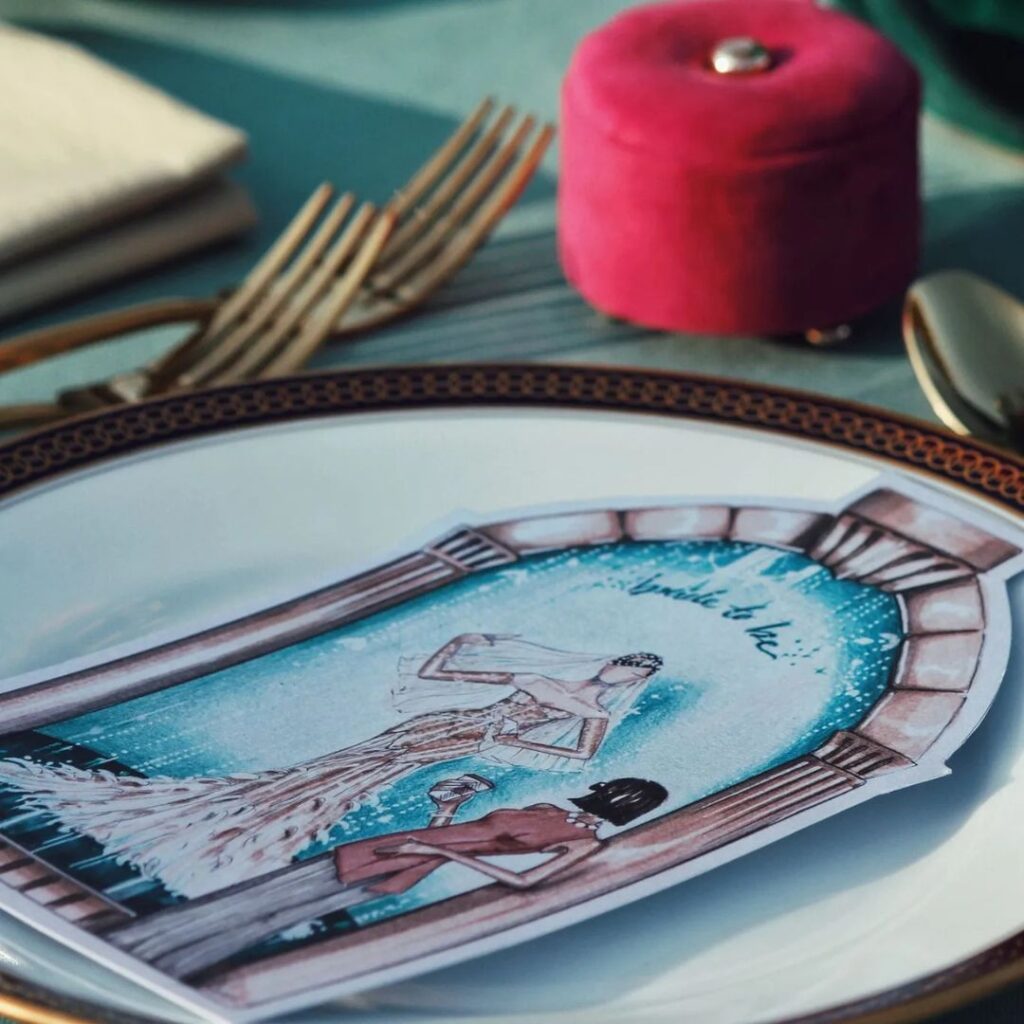
The choice should also take the season, lighting, and surroundings into account. Soft colours can contribute to a light, airy atmosphere, while stronger contrasts can enhance a contemporary design. The palette should be assessed within the context of the venue, as the same shade can appear different depending on the light and the surrounding materials.
Fabrics, paper, ceramics, glass, metals, and natural materials introduce additional layers of character. Textures help make the design richer without necessarily increasing the number of decorations.
A well-designed colour palette does not require every element to be identical to the others. Rather, it creates a relationship between colours and materials, allowing the different components to retain their individuality within a harmonious whole.
From Visual References to Practical Choices
A moodboard should gradually become a practical working tool. After defining the atmosphere and the main references, it is necessary to assess which elements can be implemented at the chosen venue and within the budget.
Inspirational images do not always represent solutions that can be replicated directly. They may feature out-of-season flowers, installations created in very different spaces, or unavailable materials. The design process consists of identifying the aesthetic principle that makes a reference appealing and adapting it to the actual conditions of the event.
The moodboard can be updated throughout the process while maintaining a clear direction. Each change should respond to a specific need, such as a budget adjustment, a choice of venue, or the availability of certain materials.
A Shared Language Between the Couple and Suppliers
The moodboard helps communicate the project to the professionals involved. A shared visual reference can clarify the desired proportions, colour tones, textures, and overall atmosphere more effectively than a generic description. This facilitates discussions with the flower designer, the graphic designer, and other suppliers.
It is nevertheless important to accompany the images with precise guidelines, distinguishing essential elements from sources of inspiration. This helps reduce the risk of unrealistic expectations and encourages more effective collaboration.
For Filomena D’Amelio, the moodboard represents a fundamental step in transforming initial ideas into a shared vision. It is the moment when the couple’s identity meets the practical possibilities of the project, giving rise to coordinated aesthetic choices.
Creating a moodboard means learning to observe, select, and establish connections. When colours, materials, and details follow a shared direction, the wedding acquires its own visual identity, capable of accompanying every moment with coherence and elegance.